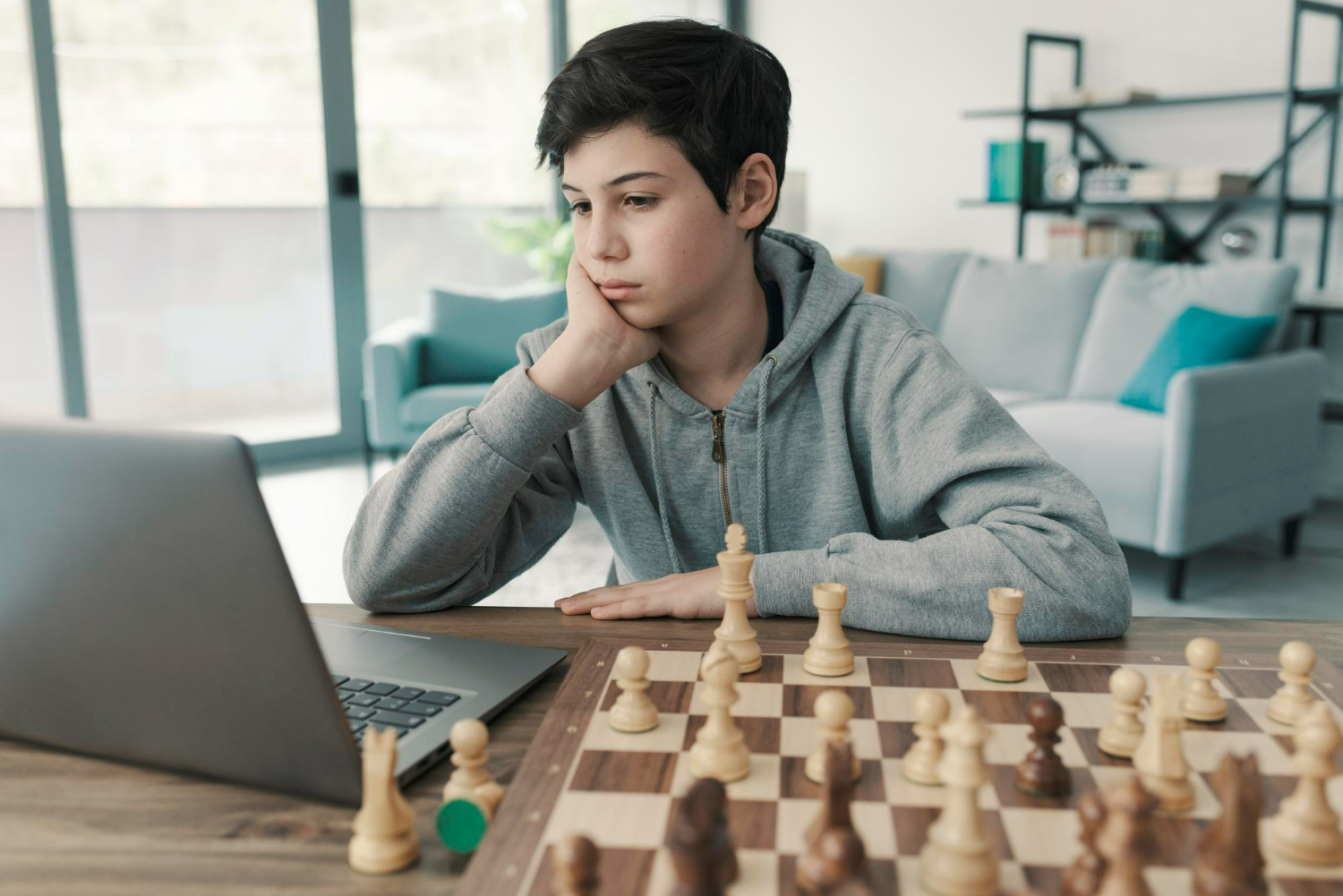
About Course
This beginner chess course is designed to introduce students to the exciting world of chess. The course starts with learning the board setup, piece movements, and basic game rules such as castling, en passant, and pawn promotion. As students progress, they will explore essential opening principles, tactical patterns like forks and pins, and basic endgame techniques. By the end of the course, students will be able to play confidently, recognize common strategies, and avoid beginner mistakes. The course includes engaging activities like solving chess puzzles, analyzing games, and practicing through structured gameplay.
Key Benefits:
Live and interactive chess lessons with expert coaches.
Strong foundation in chess basics, strategy, and tactics.
Hands-on learning with practice games and puzzles.
Enhances critical thinking, problem-solving, and decision-making skills.
Prepares students for friendly competitions and further chess studies.
What You’ll Learn:
Chess Basics
- Board setup and piece arrangement.
- Movements of pawns, rooks, bishops, knights, queens, and kings.
- Special rules: Castling, en passant, and pawn promotion.
Understanding Objectives
- Goal of chess: Checkmate vs. capturing pieces.
- Identifying check, checkmate, and stalemate situations.
- Basic checkmate patterns (e.g., King and Rook vs. King).
Opening Principles
- Importance of central control and piece development.
- King safety and early castling.
- Common opening mistakes to avoid.
Basic Tactics
- Recognizing forks, pins, skewers, and discovered attacks.
- Double checks and their impact on gameplay.
- Using tactics to gain material and improve positions.
Endgame Basics
- Simple checkmate techniques with King and Rook, and King and Queen.
- Understanding pawn promotion and opposition.
- Applying endgame strategies effectively.
Practical Play & Improvement Tips
- Reading and writing chess moves using algebraic notation.
- Practicing with beginner-friendly chess puzzles.
- Analyzing games to learn from mistakes and improve.
Skills You Will Gain
Chess Fundamentals & Board Awareness
Game Objectives & Winning Strategies
Opening Strategies & Principles
Tactical Skills & Attacking Ideas
Strategic Thinking & Positional Play
Endgame Mastery